Indocentric Chimera
MMXXI
  • HOME
  • INDO Contemporary
    • INDO essays & articles
    • INDO musicians
  • INDO History Overview
    • INDO History In Depth
  • INDO Hall of Fame
    • TOTOK Hall of Fame
  • INDO Biographies
  • INDO Information
  • INDO cinema
    • INDO documentaries
  • Contact
    • INDO Forum
  • Blog

Bibi Mentel

3/16/2021

0 Comments


Indo icon of courage and perseverance 

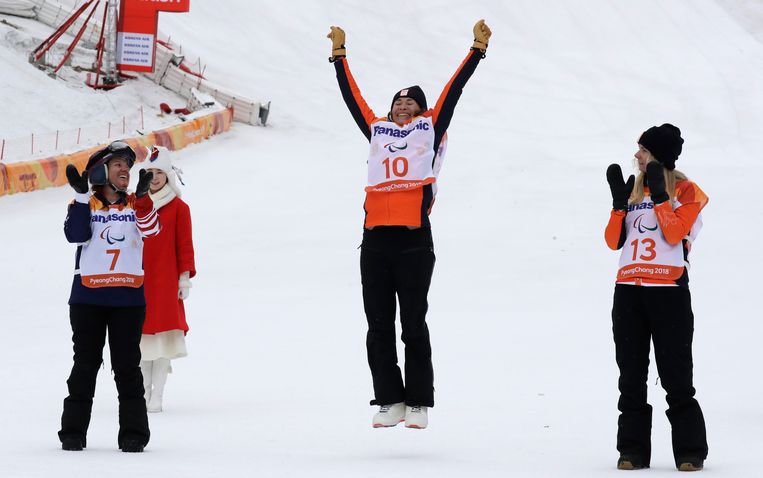
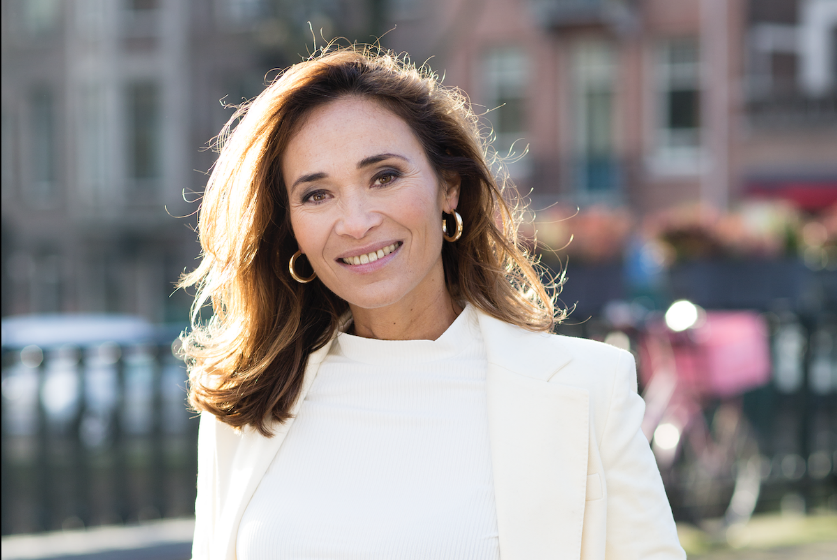
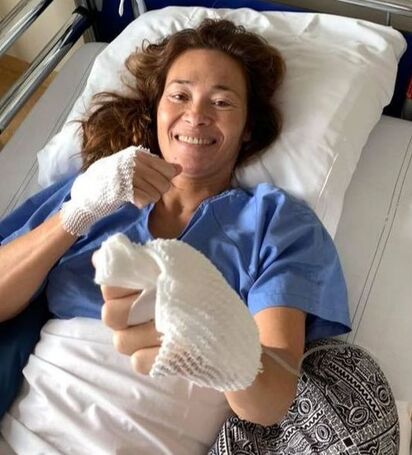
Bibian Mentel (1972-2021) is an Indo Olympian and multiple gold medal winner in the Paralympics. While battling severe cancer and having lost a leg by amputation, she has managed to win 3 golden Olympic medals and became a 5 time world champion in the sport of snowboarding. She won her last medals in 2018 at the age of 45. She is a knight in the order of Orange Nassau and has become an international icon of courage and perseverance.  
Picture

Sports career

In The 90's Mentel was already a 6 time national champion in the regular snowboarding competition. She qualified for the 2002 Winter Olympics, when she was diagnosed with malignant bone tumor. To stop the invasive cancer from spreading she chose to have her leg amputated. 4 months later she was snowboarding again and a mere year later she actually won the Dutch national snowboard cross championships wearing a prosthetic limp.

Picture
This inspired her to start an 8 year lobby for a snowboarding medal event at the paralympic Winter Games, which was achieved in 2012. In 2014 she competed herself and consequently won her first gold medal. Through medical complications from recurring cancer she wasn’t always able to compete and by 2018 most sponsors had given up on her. She however had not given up on herself.
​
While the Dutch Olympic Committee and Dutch Sports Federation had given up support for Mentel and the Dutch Skiing sports federation would only sponsor a small part of her expenses, she acquired the necessary money through crow funding. At the 2018 Winter Paralympics in PyeongChang, a 45 year old Mentel showed the world, once again, what she was made of, winning no less than 2 gold medals.
Picture
Mentel has shown unbelieveable perseverance and strength of mentality bouncing back from numerous medical set backs. In 2016 she was already diagnosed as terminal, which hasn’t prevented her from becoming a gold medalist again. She was treated for cancer nine times, including five surgeries. Her surgery in 2018 replaced her C6 neck vertebra with a titanium frame. In 2019 surgery on a tumor in her back caused a spinal chord injury confining her to a wheelchair. That same year she deviantly competed in the television show 'Dancing with the stars' and even became the runner up. In 2021 doctors discovered mestastases to the brain and found no further treatment possible. Bibi started saying her goodbyes and passed away that same year at the age of 48.

Family

Mentels mother was born under a hospital bed during a Japanese air-raid on Java in 1942. Soon afterwards she was interned in a Japanese concentration camp for the duration of the war. After the war the family returned to the Netherlands, but found it very hard to adjust. Her grandfather was not able to really settle in Holland and found work in South Africa. He only returned home to his family in the Netherlands every 18 months.

At the age of 18 Mentels mother was married to her father, who was an Indo that had also spent the war years in a Japanese concentration camp. They moved to Ghana for almost 5 years, where she had two miscarriages. Due to the malnutrition in the warcamp Mentels mother’s utures wasn’t fullgrown. After succesfull medical treatment Mentel was born in the year 1972.
​
At one point Mentels father decided to move to Sri Lanka, where he said he felt at home. As a young traumatized boy after the war he and his family were able to recuperate on Sri Lanka, former Ceylon, which left him with beautiful impressions of the country. Mentels mother did not agree and her parents soon divorced. Mentel herself was 19 at the time and chose to stay in Holland and pursue a snowboarding career.   

During her snowboarding career and her tenacious battle with cancer Mentel raised a family. Mentel was a motivational speaker and in 2012 she set up her own "Mentelity foundation", to stimulate, motivate, and inspire children and adolescents with a physical disability (to continue) to engage in sports, both in general, as well as in extreme board sports in particular, making a positive contribution to the mental and physical development of the physically handicapped.

In her lifetime she's given us the definition of the word...

Fighter
Picture
Hormate
0 Comments

Thierry Baudet

3/8/2021

0 Comments


Thierry

Thierry Baudet is an influential and unorthodox contemporary Dutch politician of Indo descent. He is an academic and  author in the fields of history and philosophy, and founder of the thinktank FvD. He graduated as a Doctor of Philosophy with a thesis on national identity, European identity, and multiculturalism. Based on his thinktank he founded a new political party that was fairly successful from the get go. Coincidentally many of his political contemporaries (Wilders, van Klaveren, a.o.) happen to have Indo roots as well.    
This article includes short bio's of two notable ancestors.

Great grandfather

Professor Pierre Joseph Henry (Han) Baudet was born in Baarn, the Netherlands in 1891 and married the Indo heiress Ernestina Louisa Augusta van Heemskerck (1890-1971). He was a talented Dutch mathematician, famous for the ‘Baudet assumption’ that was later proven by the Van der Waerden's mathematical theorem. He was also a talented pianist, cellist en chessplayer. He died in 1921 at the young age of 30.

​The French (Walloon) family name Baudet stems from ancestor Pierre Joseph Baudet from Hainaut who settled in the Netherlands in the year 1795. The Heemskerck family was an old Indo family from Kediri, Java.

Grandfather

Professor Ernest Henri Philippe (Henri) Baudet was born in The Hague, 1919. He was a historian and like his father a talented cellist and chessplayer. During the war he joined the resistance and made two attempts to cross the canal and join the allied war effort from the UK. He married Senta Goverts in 1945, who was a co-resistance fighter and was later awarded the ‘Righteous among the nations’ honor.
​
Henri Baudet is the grandfather of Thierry Baudet (1983).

The Jinek incident

In March 2021 during the run up to the national elections Baudet was invited to the talksshow of Eva Jinek on Dutch televison. While attempting to make his points he was this time unable to win the debate against a hostile talkshow guest and host. At the end of the show there is always a moment of comic relief. 
Picture
The comedian in question however began to unexpectedly roast Baudet on very personal topics. Attempting a character assasination by making jokes using Baudets Indo background. The cringy jokes were misplaced and hardly funny, which made Baudet stand up and leave the studio. 
Contentious content of the roast: The comedian was making jokes trying to point out that Baudet may very well be anti-semitic and racist, but not in such a bad way, as he has a Jewish girlfriend and is of Indo descent. Quote: " ...you yourself are highly deluted by Indonesian DNA." 
 ​Jinek, herself of Jewish descent, later apologised for the roast and claimed she and her staff were unaware of the contents of this episode's comic relief.  

While 5 years ago his party didnt even exist that same month Baudet's party became the largest political party of the Netherlands. 
0 Comments

Toto Koopman

1/27/2021

0 Comments

 
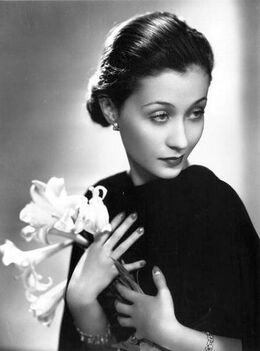
 Catharina "Toto" Koopman (28 October 1908 – 27 August 1991) was an archaeologist and international fashion model who worked in Paris prior to World War II. During WWII she became a warhero and served as a spy for the Italian Resistance. She was captured by the Nazis and held as a POW in the Ravensbrück concentration camp. She survived the war and in later life she helped establish the Hanover Gallery as one of the most influential art galleries in Europe in the 1950's.

Early years

Picture
​Born in Java in 1908, Koopman was the daughter of the Dutch KNIL cavalry officer Jan George Koopman and her Indo mother Catharina Johanna Westrik, of Dutch and Javanese descent. She was named Catharina, but came to prefer Toto, her childhood nickname after her father's favourite horse.  

Koopman left Java in 1920 to attend a boarding school in the Netherlands where she developed a talent for languages and became fluent in English, French, German and Italian. After a year at an English finishing school, she moved to Paris to work as a  haute couture model.

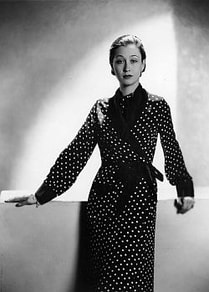
In Paris, Koopman worked as a house model for non other than Coco Chanel. She also worked for the designers Rochas, Mainbocher and Madeleine Vionnet. She appeared regularly in Vogue Paris and was photographed by Edward Steichen and George Hoyningen-Huene. 

Koopman had a minor movie role in the film The Private Life of Don Juan and attended the film's premiere with her lover Tallulah Bankhead, who introduced her to Lord Beaverbrook. The Canadian press-baron and Koopman eventually began an affair (1934) that lasted several years. She traveled throughout Europe in the 1930s and often attended opera performances in both Germany and Italy. When Beaverbrook discovered that Koopman was also in a relationship with his son, Max Aitken, he ran a series of stories in the newspapers he owned, (including the Daily Express and the London Evening Standard), that tried to make Koopman an outcast in London high-society. Still Koopman ignored his efforts and she and the younger Aitken lived together for four more years.

Throughout her life Toto Koopman exhibited a free spririt, unapologetically scandalous and riveting, she was openly bi-tracial and bi-sexual, in a time when other celebrities like movie star Merle Oberon felt the need to conceal a multi-ethnic background by pretending that her dark-skinned, Anglo-Indian mother, who was living with her, was her maid.   

 “She was fascinating for many different reasons. She spoke five languages fluently, she was a brilliant wit, she was beautiful, but it’s much more than that. All her friends are still completely captivated by her — the glamorous outsider.” “She was a living mystery,.. full of interesting contradictions."- ​Jean-Noël Liaut (Biographer)

World War II and later life

Picture
Koopman left London in 1939 to live in Italy. There she began a relationship with a leader of the anti-Mussolini resistance. When World War II broke out, she agreed to use her contacts and language skills to spy for the Italian Resistance.

She infiltrated meetings of the Black Shirts, but was captured. After spells in prisons in Milan and Lazio she was sent to the Massa Martina detention camp but escaped and hid in the mountains around Perugia, where she worked with a local resistance group.

She was recaptured, promptly escaped again and made her way to Venice. There, in October 1944, Koopman was caught spying on high-ranking German officers in the Danieli Hotel and quickly deported to the Ravensbrück concentration camp.

While there, she decided to tell camp officials that she was a nurse who had trained at St. Mary’s Hospital in London. The fact that she delivered this tale in impeccable German is one reason it was believed. She was assigned to a medical team there, which may have saved her life.

​​Very shortly before the camp was liberated in April 1945, the Nazi authorities released several hundred prisoners, including Koopman, to the care of the Red Cross in Sweden. A former boyfriend, Randolph Churchill (a relative of British warleader Winston Churchill) went to Gothenburg and helped the emaciated Koopman obtain new clothes, a new passport and a wig for her shaved head.

While recuperating in Ascona in 1945, Koopman met the art dealer Erica Brausen. The two became lovers and would remain together for the rest of their lives. Brausen was about to open her own commercial gallery in London and the two women worked to get the Hanover Gallery established. In due course the Hanover became one of the most influential galleries in Europe, most notably by nurturing the early career of Francis Bacon.

During the 1950s Koopman studied at the University of London and became an archeologist. She took part in several archaeological excavations and made a considerable donation of books to the Institute of Archaeology in London.

​In 1959 Koopman and Brausen bought a property on the island of Panarea where they built six villas amongst extensive gardens and entertained very lavishly. They continued to live together until Koopman's death in August 1991, eighteen months before Brausen's death.
Source: https://wwd.com/eye/lifestyle/model-toto-koopmans-story-rediscovered-in-new-tome-7100765/
0 Comments

Anneke Grönloh

9/15/2018

0 Comments

 
Indo diva Louise Johanna "Anneke" Grönloh (7 June 1942 – 14 September 2018) was an iconic Dutch Indo singer with a powerful voice. She had a successful national and international career starting in 1959. She performed well into the 21st century. She scored a Dutch hit with "Brandend Zand", one of the best-selling Dutch songs of all time and in 2000 was named "Singer of the Century". In 2009 she celebrated her 50 year jubilee which was recorded for television. Her farewell concert was in 2017 and she passed away in 2018.

Grönloh was born in the jungle of Tondano, North Celebes, Netherlands East Indies (now Indonesia), as her mother was a resistance fighter hiding from the Japanese occupying forces. She spent her early years in the Japanese-occupied Dutch East Indies in a Japanese concentration camp. Her father, an officer in the KNIL, had been interned before her birth. Besides popular music, Grönloh also performed the Indo kroncong genre, singing songs such as "Bengawan Solo", "Boeroeng Kakatua", and "Nina bobo", and also sings jazz, which she claims is her favorite genre. She kicked off her career at age 16 and was the first Dutch teen idol of the Netherlands.   

She has been a constant figure and prominent star in the international world of pop music, from Europe to the Far East. Her music is appreciated thousands of miles away in Indonesia, Singapore and Malaysia, with popular hits like “Bengawan Solo”, “Burung Kakak Tua” topping local charts in the 1960’s. Her first single “Asmara” reached the top of the charts in all three countries.

Grönloh’s voice was golden, clear and sweet. The lyrics to her songs were beautiful and centered around love and nature.
In “Oh, Malaysia”, her love for the country is undeniable:
​
“Oh, Malaysia – land of glory
Where I found my heart’s true love
In a night so warm and tender
With the moon and stars above”
The chorus of “Bengawan Solo”, translated into English, beautifully captured moments of intimacy and love on the Solo River in Indonesia:

“Nightingales softly singing
The guitar is gently playing
Moon and stars brightly shining
Shining for you and I
In that moment divine
You whispered you were mine
And you vowed we’d never part
Down by the river of love”
Picture
Legacy: She was the most prominent and outspoken Indo diva and has left behind a legacy of nostalgia and beautiful music that reflects the vibrance of the bygone era of the Dutch East Indies and the Netherlands and South East Asia of the 50's.
0 Comments

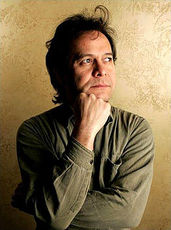
Leonard Retel Helmrich

8/12/2012

0 Comments

 
Picture
Leonard Retel Helmrich is a Dutch cinematographer and film director ofIndo descent. He was born the 16th of August 1959 in Tilburg, Netherlands and has lived in Amsterdam since 1982. Received highest honours for international documentaries at the Sundance Festival and was the first two-time International Documentary winner at the Amsterdam Film Festival.

Helmrich is famous for perfecting the 'Single Camera Shot' filming style and his related technical camera innovations. 

"...you can move inside an event and go with your camera to the right spot, at the right moment,... That’s what the whole single-shot cinema is about: trying to think of the world as a kind of clockwork, a machinery, with everything interrelated. The bigger and smaller things are just as important. In a clockworks you can’t pull out a little gear because the whole thing jams. The solution is to become one of the clockworks.", Leonard Retel Helmrich.

Biography
After Indonesian independence the Helmrich family repatriated to the Netherlands during the Indo diaspora. His father, Jean Retel Helmrich, was born to a wealthy totok family in Semarang, Dutch East Indies, fought against the Japanese invaders during World War II and was interred as aPOW for three years. After the war he married a Javanese woman. “It was forbidden,” Mr. Helmrich’s sister and producer, Hetty Naaijkens-Retel Helmrich, explained. “They had to get permission from the queen, from the Indonesian government, the Dutch government, the Muslim church, and the Catholic Church. It was Romeo and Juliet.” Growing up, the filmmaker “had a lot of problems because of his dyslexia,” she said. “The teachers were always complaining that he was living in his own world, but already when he was a little boy he made very good drawings.” The family’s belief in him extended to financing “Eye of the Day” and getting involved in other ways. Ms. Naaijkens-Retel Helmrich’s production company, Scarabee, produces Mr. Helmrich’s films; her son, Jasper Naaijkens, is his uncle’s editor — which cannot be any easy job, considering Mr. Helmrich can come up with hourlong shots.

Read More
0 Comments

Frits van Daalen

7/29/2012

0 Comments

 
Picture
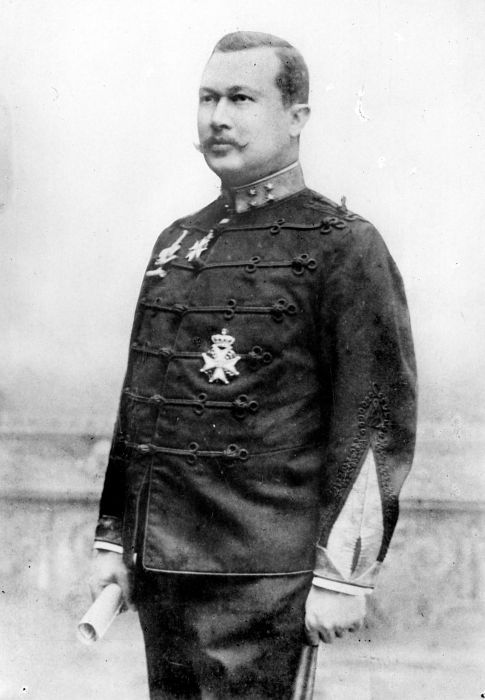
Lieutenant General Gotfried Coenraad Ernst van Daalen better known as Frits van Daalen (Makassar, 23 March 1863 - The Hague, 22 February  1930) was an Indo (Eurasian) general of the Royal Dutch East Indies Army (KNIL) who served in the Dutch East Indies.

Van Daalen was named after his Dutch father Gotfried Coenraad Ernst (Frits) van Daalen (born in 's-Hertogenbosch, the Netherlands 23 July 1836 and died in Surabaya, 13 May 1889), also a famous, decorated KNIL officer and veteran of the Aceh War, who was discharged from service as a consequence of a scandal where he saw fit to publicly offend the Governor-General  (highest colonial authority) of the colony.

As a young officer in the rank of Lieutenant and Captain Van Daalen was awarded several prestigious militairy distinctions for proven bravery. He first became Knight of the Military William Order in 1890, was awarded the Honorary Sabre by the Dutch monarch in 1897, followed by becoming an Officer of the Military Willem Order in 1898.

Although notorious due to his controversial approach during the final phases of the protracted Aceh War and his consequent conflicts with both Van Heutsz and Snouck Hurgronje, he was appointed Governor of Aceh between 1905 and 1908.

He was eventually promoted to the highest rank of Luitenant-generaal in 1909 and became Commander of the KNIL in 1910, before retiring and repatriating in 1914.

Read More
0 Comments

Giovanni Narcis Hakkenberg

7/17/2012

0 Comments

 
Picture
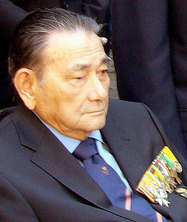
Giovanni Narcissus Hakkenberg (Surabaya Dutch East Indies, 6 December 1923) is a retired Sea-lieutenant of the Royal Dutch Marines, decorated war hero and knight of the Military Order of William. The Military William Order is the highest honour in the Netherlands, only bestowed for "...performing excellent acts of Bravery, Leadership and Loyalty in battle". In 2012 one of a handful of surviving knights of the William order.

Hakkenberg was the sole survivor of the 10 brothers and cousins that volunteered for service at the break of  WWII. Motivated by a more than average sense of purpose, justice and a sincere love for the land Hakkenberg fearlesly engaged in an almost personal battle with the gangs and guerrillas in the area where he was responsible to restore peace and order during the chaos of the Indonesian revolution. For the same reasons he saw to it that the Dutch soldiers treated the people well.

Responsible for countless legendary arrests he often made alone at night time, he was knighted and awarded the highest military honours. Hakkenberg would regularly hike alone into Republican territory to negotiate with the kampung (village) heads, inquire with his numerous informants and also speak with or even tell off his adversaries. Confident but never foolhardy he seemed endowed with a supernatural sense of timing.

In 1941 at the age of 17 he volunteered to join the Dutch Royal Navy to fight Nazi Germany in the European arena. After their training volunteers were needed home in the Dutch East Indies due to the increasing threat of the Japanese Empire. Aboard the admiral class destroyer HNLMS Kortenaer he was the youngest sailor on February 27, 1942 to engage the Japanese navy in the Battle of the Java Sea. His vessel was torpedoed and sunk. Hakkenberg was rescued by the HMS Encounter and brought to Surabaya.

On March 8, 1942 the Dutch East Indies capitulated to the Japanese and Hakkenberg became an allied POW. As POW he was a captive in Thailand, a forced labourer on the Burma Railway and finally in 1944 a forced labourer in the Japanese coal mines.

After the Japanese capitulation Hakkenberg was the only one of his 10 brothers and cousins who survived the war. He remained at arms in the Navy and became a Marine serving throughout the Indonesian national revolution. After the independence of Indonesia he continued his military career until retiring in 1974 as a Sea Lieutenant of the Marine Corps.
Picture

Read More
0 Comments

Vic Hayes

5/4/2012

1 Comment

 
Picture
Victor "Vic" Hayes (born July 31, 1941 Surabaya, Dutch East Indies), the father of WIFI, is a Senior Research Fellow at the Delft University of Technology. His role in establishing and chairing the Standards for Wireless Local Area Networks has led to him being referred to as a living legend of modern technology  and the "Father of Wi-Fi".

Interview for Network World 'Q&A Living Legends': (2011)
Vic "Father of Wi-Fi" Hayes hardly fits the conventional image of a "legend." Soft-spoken on the phone, self-effacing, he's less a technological visionary and more of a problem solver. But Hayes was the first chair of the important 'IEEE 802.11 group', which in 1997 finalized the wireless standard for radios. The radio link would make connecting systems physically simpler, and eliminate the need to fiddle with proprietary protocols.

Although he had a radio background, thanks to his Dutch Air Force training, and NCR experience with data communications protocols, Hayes at first hesitated to accept the chairmanship, until a colleague assured him, "Vic, you can do this." "This" included a crash course in learning "Roberts Rules of Order." "I had to get a feeling for that," Hayes says, from his office at Delft University of Technology in The Netherlands, where, at 69, he is a senior research fellow on the Faculty of Technology, Policy and Management. "I purchased the book and studied it, so I could lead the group. I very much liked it."

We caught up with Hayes at his university office, where in between international conferences and authoring (most recently co-authoring "The Innovation Journey of Wi-Fi: The Road To Global Success"), he's helping to launch a new research project that will analyze Wi-Fi deployments in rural areas and developing economies to identify the ingredients of successful wireless broadband projects.

Q: Do you have a sense of how important your technology is to the world? 
A: Yes. First in 1998, when we started our own wireless network at the meetings, with one of the laptops being a server. One person put all the new documents on the server and within two minutes all 120 people had them.

The second time, I realized how good it was, was when I started to see the user innovations and initiatives in using Wi-Fi for long-range communications in rural areas. Creating networks to bring broadband to the people really makes me happy.

Click: Dutch article at Computable. 
1 Comment

Adriaan van Dis

4/20/2012

0 Comments

 
Picture
Adriaan van Dis (Bergen aan Zee, 16 December 1946) is a Dutch author, with Indo (Eurasian) roots, residing in France. Van Dis debuted in 1983 with the novella Nathan Sid. In 1995 his book Indische Duinen (My fathers war), which in its narrative is a follow up to his debut novella, was also awarded several prestigious literary awards.

He is also known as the host of his own award winning television talkshow named Hier is... Adriaan van Dis, that lasted from 1983 to 1992 and several successful award winning television documentaries. His television series 'Van Dis In Indonesia' (2012) put both Indonesia and the Indies back in Dutch living rooms.  Dutch and Indonesian language with Dutch subtitles.  All episodes:   http://programma.vpro.nl/vandisinindonesie/afleveringen.html 

With the publication of his Indies inspired compilation book De Indie boeken(The Indies books) in 2012, Van Dis establishes himself as one of the most significant second generation Indo authors of Dutch Indies literature. The compilation includes a wide range of his best seller books, in which Van Dis exquisitely describes the trials and tribulation of first and second generation repatriates. Like fellow Indo author Marion Bloem his storytelling is based in old Malay and Pecok verbal traditions. His award winning books evoke the great sense of displacement and rife antitheses that affects generations of Indos. Books include the novels: My Father's War and Repatriated a novel in sixty scenes.

Translated to English:
  1. http://www.worldcat.org/title/my-fathers-war-a-novel/oclc/033440689 
  2. http://www.worldcat.org/title/repatriated-a-novel-in-sixty-scenes/oclc/176824273 

Life
Youth


His father was an Indies-Dutchman and his mother a farmer's daughter from Breda who had met each other in the Dutch East Indies after the War. By then his mother already had three daughters from her first marriage to a Royal Dutch East Indies Army KNILofficer of Indo-European descent. His father had been married before as well, in the East Indies. His family had been heavily affected by the Second World War and the subsequent Indonesian revolution.

As a survivor of the Junyo Maru disaster, which had been mistakenly torpedoed by the British, his father performed forced labour as a POW on the Pakan Baroe railroad on Sumatra. Adriaan van Dis's mother's first husband was a resistance fighter and was decapitated during the Japanese occupation (1942–1945). His mother ended up in a Japanese interment camp along with her 3 young daughters.

Adriaan, born after the war, in The Netherlands, felt like an outsider in his own family because he was the only white child and had no direct history in the Indies or of the war. His environment contributed to this sense of loneliness. Bergen aan Zee was home to many people who had come from the Dutch East Indies and Adriaan grew up in a house that he shared with four repatriated families of mostly Indo-European descent.

Adriaan's parents were unable to get married. While his father's marriage had been disbanded under Islamic law, that divorce had no legal validity in The Netherlands. Nobody was allowed to know this, and so, for the sake of the outside world, Adriaan took on his father's surname. However, officially his surname remained his mother's: Van Dis. When Adriaan went to college, he actually began using his real name. Later in life while working on his autobiographic novels Van Dis discovered that out of spite his fathers family hid the fact that his father was in fact already a widower.

His father had been traumatised by the war and was unable to work. Furthermore, he found it difficult to find a place in The Netherlands as a migrant; he never felt like he fit in. He was always home and raised Adriaan in a conservative manner, frequently beating him. Adriaan remembers him as a cruel man, but also as a victim of circumstances. He is one of his main literary inspirations and his perspective on his father evolves with each related novel.


Read More
0 Comments

Jan Toorop

4/15/2012

0 Comments

 
Picture
Jean Theodoor Toorop (20 December 1858 – 3 March 1928), better known as Jan Toorop, was an Indo painter, whose works straddle the space between the Symbolist painters and Art Nouveau. His early work was influenced by the Amsterdam Impressionism movement.

Jean Theodoor Toorop was born on 20 December 1858 in Purworejo, Java, Dutch East Indies. He has so called Belanda Hitam roots (A forefather was one of the African KNIL soldiers recruited from the Gold Coast, now called Ghana). In 1872, he moved with his family to the Netherlands, where he studied in Delftand Amsterdam. In 1880 he became a student at the Rijksakademie in Amsterdam. From 1882 to 1886 he lived in Brussels, where he joined Les XX (Les Vingts), a group of artists centred around James Ensor. Toorop worked in various styles during these years, such as Realism, Impressionism Neo-Impressionism and Post-Impressionism.

After his marriage to an English woman, Annie Hall, in 1886, Toorop alternated his time between The Hague, England and Brussels, and after 1890 also the Dutch seaside town of Katwijk aan Zee. During this period he developed his own unique Symbolist style, with dynamic, unpredictable lines based on Javanese motifs, highly stylised willowy figures, and curvilinear designs.

Thereafter he turned to Art Nouveau styles, in which a similar play of lines is used for decorative purposes, without any apparent symbolic meaning. In 1905 he converted to Catholicism and began producing religious works. He also created book illustrations, posters, and stained glass designs.

Throughout his life Toorop also produced portraits, in sketch format and as paintings, which in style range from highly realistic to impressionistic.

Toorop died on 3 March 1928 in The Hague, Netherlands. His daughter Charley Toorop (1891–1955), grandson Edgar Fernhout (1912-1974), and great grandson Rik Fernhout continued in his artistic footsteps.
0 Comments
<<Previous

    INDO BIO BLOG

    Indo biographies. Learn more about Indo Icons.

    Archives

    March 2021
    January 2021
    September 2018
    August 2012
    July 2012
    May 2012
    April 2012
    March 2012
    February 2012
    May 2011
    April 2011
    February 2011
    January 2011

    Names

    All
    Adriaan Van Dis
    Andy Tielman
    Aviator
    Beb Vuyk
    Bibi Mentel
    Dick De Hoog
    Eddy Du Perron
    Ernest Douwes Dekker
    Ernst Jansz
    Ferrie Portier
    Frits Dahler
    Frits Van Daalen
    Henri Baudet
    Jan Boon
    Jan Hilgers
    Karel Zaalberg
    Leonard Retel Helmrich
    Louis Couperus
    Louis Grondijs
    Maria Dermoût
    Marion Bloem
    Paatje Phefferkorn
    Rob Nieuwenhuys
    Tante Lien
    Thierry Baudet
    Tjalie Robinson
    Toto Koopman
    Vic Hayes
    Vincent Mahieu
    Wieteke Van Dort

    RSS Feed

    Picture

    FuBu

    The collaborative approach.

Powered by Create your own unique website with customizable templates.